Strategic message to the US and its allies
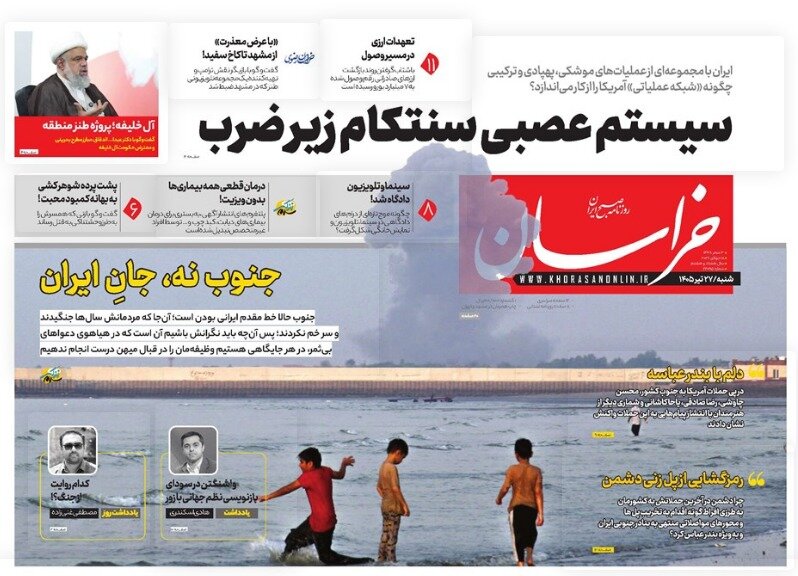
Khorasan analyzed the shutdown of the UAE’s Fujairah port following the IRGC missile strike, writing that this port had been the most important hub for tanker traffic in the region. One point stands out above all: US protection failed to safeguard the tankers and the UAE’s strategic port.
For the Emirates, this is not merely an operational setback; it is a security blow to a system that for years had been built under Washington’s protective umbrella. If a port of such importance — backed by international support — can be knocked out of service, it means the regional energy‑security equation has entered a new phase. This message carries deterrent and strategic dimensions both for the UAE and its extra‑regional supporters. Fujairah has now shifted from being a symbol of bypassing constraints to a symbol of the vulnerability of the UAE’s oil strategy — an event that imposes costs on Abu Dhabi and sends a clear signal to the global oil market about the fragility of energy security in the southern Persian Gulf and Iran’s ability to redefine the security equation in the region.
Jam‑e-Jam: Containing the US is only possible through military means
Jam‑e-Jam analyzed how the war might end and how to prevent renewed attacks. According to this analysis, the Americans now want Iran’s oil. They have two main reasons for attacking Iran, one of which is generating revenue for the US government. They want to seize Iran’s oil and profit from it. The opposing side must understand that not only will it fail to take Iran’s oil, but the entire region’s oil could be removed from the global market. Confronting the US cannot be resolved with paper, signatures, or memoranda; it can only be resolved through military power and imposing military costs. Conditions must be managed in a way that stops the war. The cost of attacking Iran must be raised so high that no one considers repeating it. There is no other path. If the attacks continue and we imagine that issuing a statement or signing a document solves the problem — and even call it an achievement — we will ultimately return to the same point.
Arman‑e-Emrooz: Moving beyond extremism to strengthen the battlefield and diplomacy
Arman‑e-Emrooz examined how to navigate this historic turning point and the crisis of war. It argued that at a time when the country’s political atmosphere is shaped by regional developments, external pressure, and growing internal divisions, moving beyond extremism and adopting a rational, national‑interest‑based approach is an undeniable necessity. Accordingly, strengthening both the battlefield and diplomacy should not be seen as contradictory; rather, they are complementary components that can serve national goals. In this view, defense and maintaining military capabilities are essential, but negotiations can also provide opportunities to reduce costs, prevent escalation, and secure necessary advantages for the country. Historical experience shows that a smart combination of field power, active diplomacy, and rational decision‑making can pave the way for overcoming challenges and improving conditions.
Javan: J.D. Vance’s rhetoric against Iran
Javan discussed J.D. Vance’s remarks. While the US claims that the cancellation of the memorandum and the resumption of attacks were due to Iran violating the ceasefire, statements by senior Washington officials suggest other factors behind the scenes that are provoking tensions. Vance, referring to Israel’s long‑standing efforts to influence US political and social dynamics — a topic frequently raised in media — openly spoke of the regime’s advertising campaigns and financial spending aimed at preventing an agreement with Iran, telling those aligned with these campaigns to “go to hell.” In his recent comments, Vance has tried to strike a peace‑seeking pose, suggesting that Washington does not seek to interfere in Iran’s internal affairs. He considers continuing the war with Iran inappropriate — but his concern, he claims, is not rising human casualties, but the potential consequences for Western countries.
Leave a Comment