National biodiversity action plan finalized to halt nature loss
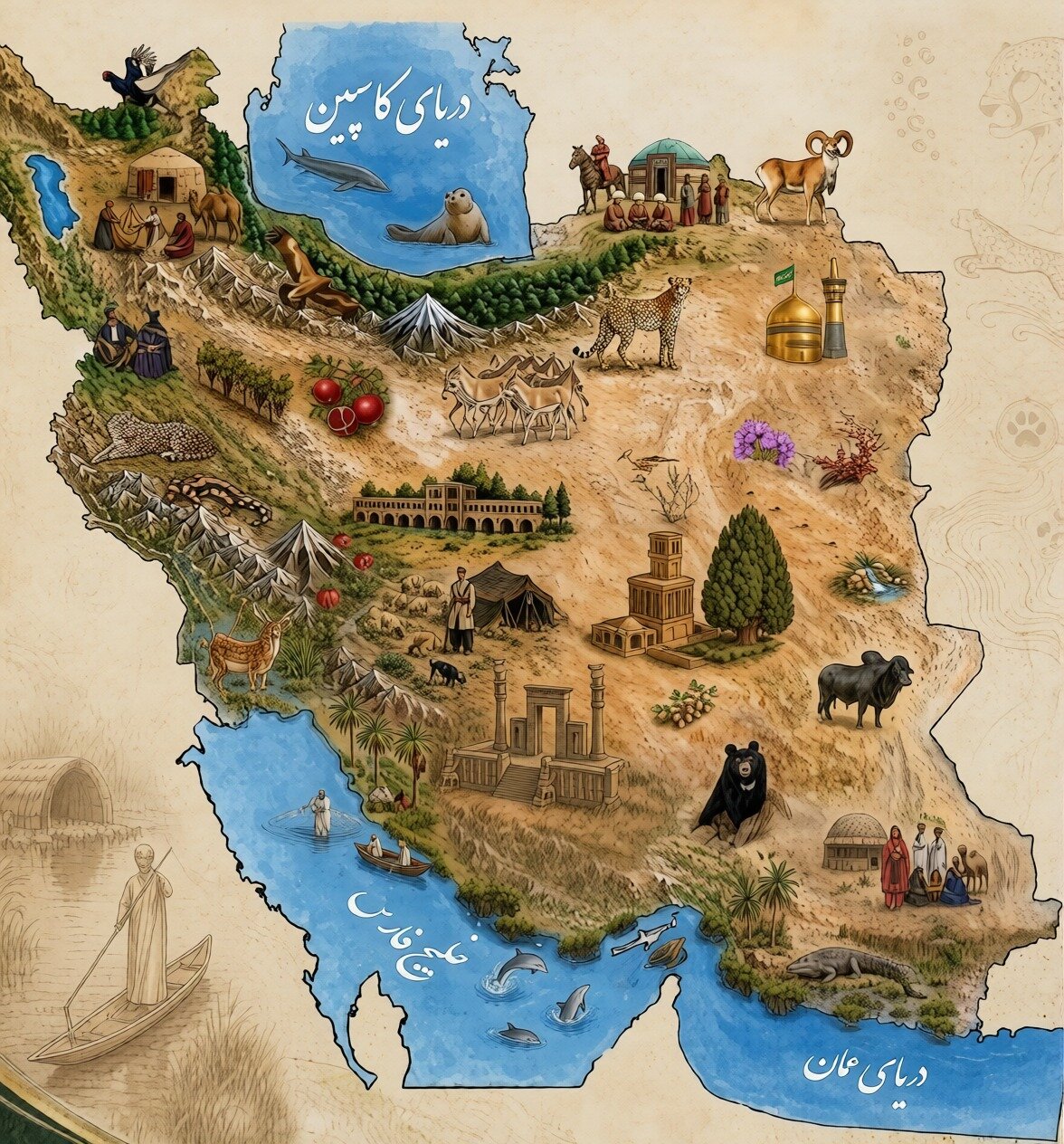
TEHRAN – The Department of Environment (DOE) has released the final revision of the ‘National Biodiversity Strategies and Action Plan (NBSAP3)’, which provides a framework to halt and reverse biodiversity loss by 2030 and achieve harmony with nature by 2050 through effective, comprehensive national participation.
The NBSAP3 has been developed through a participatory and forward-looking process, drawing upon the long-standing Iranian tradition of respect for nature, consistent with the national and global goals and the country’s commitments to biodiversity, IRNA reported.
The strategy is designed to establish a national framework for the conservation, restoration, and sustainable use of biodiversity, aligned with the Kunming-Montreal Global Biodiversity Framework (KM-GBF).
The NBSAP aims to safeguard Iran’s valuable natural assets by making biodiversity conservation an integral part of national development, public well-being, and Iranian identity. It seeks to achieve this through broad-based engagement involving all levels of government and society.
Speaking on October 16, at the summit of heads of state and government held as part of the 17th Conference of the Parties to the Convention on Biological Diversity (COP17) in Yerevan, President Masoud Pezeshkian called for “peace diplomacy” to protect biodiversity, condemning the devastating environmental impact of wars of aggression as ecocide and urging the international community to establish effective, transparent, and enforceable mechanisms to safeguard natural heritage during wartime.
Pezeshkian described environmental cooperation as a bridge between nations, stressing that biodiversity conservation could serve as an important pillar of “peace diplomacy.”
“In a region facing security crises stemming from the illegal and expansionist presence of powers, as well as climate change, water scarcity and ecosystem degradation, environmental cooperation can build bridges between nations,” he said.
“Today, we stand at a pivotal moment in history when biodiversity is no longer merely a scientific or environmental concern. It is also an issue of peace and security, human health, food and water security, and intergenerational justice for all the inhabitants of our planet,” Pezeshkian stressed.
“The Islamic Republic of Iran was among the first countries to recognize the legal and international significance of this issue and become a party to the Convention on Biological Diversity (CBD). However, Iran’s relationship with biodiversity goes far beyond its membership in an international convention.
With an ancient tradition of living in harmony with nature and an extraordinary diversity of ecosystems, species and genetic resources, Iran is the custodian of an invaluable and irreplaceable natural wealth. This heritage is the result of millions of years of evolution, natural dynamism and adaptation, and is reflected in the culture, customs, livelihoods, indigenous knowledge and historical identity of the people of this land.
Owing to its exceptional geographical location, Iran lies at the intersection of several biogeographical regions. From the Hyrcanian and Arasbaran forests to the Zagros Mountains, and from arid and desert landscapes to the coasts of the Persian Gulf, the Sea of Oman and the Caspian Sea, Iran is home to thousands of plant and animal species, as well as valuable genetic resources. These natural assets underpin the country’s ecological stability and sustainability, provide a vital foundation for water and food security and human health, strengthen resilience to natural hazards, and serve as a cornerstone of sustainable development.
In Iran, biodiversity, together with climatic and geographical diversity, is deeply intertwined with human history and civilization. Friendship with, respect for and protection of nature are integral to the cultural, religious and ritual identity of Iranians. Nature has long been regarded as an inseparable part of human life and a trust to be preserved for future generations. Many traditional ways of life, agricultural and livestock-raising practices, the use of medicinal plants, and the indigenous knowledge of Iranian communities have evolved over time through an understanding of and adaptation to nature, reflecting thousands of years of interaction between humans and the natural world.
For Iran, therefore, biodiversity conservation means far more than protecting species and their habitats. It means safeguarding a natural, cultural and civilizational heritage.”
Data-driven strategies to strengthen biodiversity conservation efforts
Iran ranks among the top 20 countries in the world for biodiversity and is home to a variety of plant and animal species. However, in recent years, certain actions have destroyed habitats and pushed many species to the brink of extinction.
So far, more than two million plant and animal species have been identified in the world, of which 43,000 exist in Iran. In fact, there are 11 types of ecosystems in the world, including aquatic, terrestrial, natural, and artificial ecosystems. Iran has 9 of these 11 ecosystems. Also, out of the 42 types of wetlands in the world, 41 types have been identified in Iran.
According to the DOE, some 2,000 animal species, including mammals, birds, reptiles, amphibians, and inland fish, and about 1,200 fish species have been identified in the country’s ecosystems. Of these species, 210 mammal species, 640 bird species, 300 reptile species, 23 amphibian species, and 350 inland fish species can be mentioned. However, Iran’s biodiversity, like the rest of the world, faces many challenges such as habitat destruction, overhunting, drought, and climate change.
To strengthen the protection of wildlife species and habitats across the country based on a targeted and strategic approach, the DOE is implementing a comprehensive range of conservation, scientific, legal and operational initiatives, with priorities guided by data and scientific research.
The DOE focuses on a more scientific approach to develop and implement conservation efforts tailored to specific needs of each species and habitat, IRNA quoted Peyman Valizadeh, an official with the DOE, as saying.
It has so far prepared plans for the preservation of 25 endangered species, with thirteen more plans being developed. The plans provide a clear framework for species conservation by delineating the species’ status, major threats, conservation priorities, necessary actions, and assessment indicators, he noted.
However, the DOE faces some challenges to implement these measures at national and provincial levels. One of the biggest challenges is securing funding to implement the plans. Developing specialized capacity to preserve species is the other problem. Lack of trained, specialized forces has made it difficult to implement the conservation action plans effectively. Therefore, training specialized personnel, developing experts’ capacities in provinces, and strengthening scientific and technical capabilities of the headquarters are put on the agenda, the official highlighted.
MT/MG
Leave a Comment