Tehran, New Delhi seek stronger tourism co-op
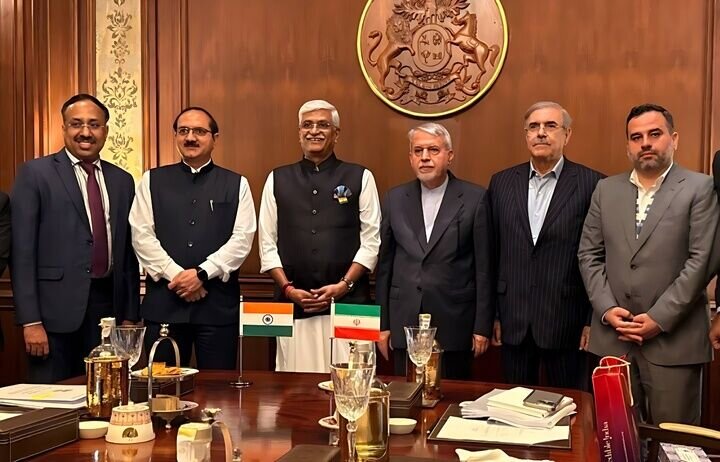
TEHRAN – Iran and India have discussed closer tourism cooperation, stronger air links, private-sector partnerships, joint UNESCO nominations and expanded medical tourism.
On Friday, Iranian Minister of Cultural Heritage, Tourism and Handicrafts Seyyed Reza Salehi-Amiri held talks with Indian Tourism Minister Gajendra Singh Shekhawat on the sidelines of the third BRICS Tourism Ministers’ Meeting in India, focusing on ways to translate the countries’ longstanding cultural and civilizational ties into practical tourism cooperation.
Salehi-Amiri said Iran and India share deep historical and civilizational connections that remain an important foundation for expanding bilateral relations, IRNA reported.
Referring to his visit to Mashhad, where he had seen mosques and schools associated with the historical presence of Indians, the Iranian minister said such sites demonstrate the depth of contacts between the two peoples.
He also pointed to the historical presence of Persian language and culture in India and the use of words with Iranian roots, describing these links as evidence of a shared historical and civilizational sphere.
Iran and India cooperate not only bilaterally but also through multilateral frameworks including BRICS and the Shanghai Cooperation Organization, Salehi-Amiri said, calling for these platforms to be used to deepen cooperation.
Despite substantial cultural and economic ties, tourism cooperation between Iran and India has not developed to a level commensurate with their broader relations, Salehi-Amiri said.
He proposed the drafting and signing of a tourism cooperation memorandum as a first step, followed by the creation of joint mechanisms to turn the agreement into concrete programs and projects.
Salehi-Amiri also formally invited Shekhawat and his colleagues to visit Iran.
Improving air connectivity and reactivating or expanding flight links between the two countries was another priority, he said, noting the potential for increased tourist flows in both directions given their cultural affinities.
The Iranian minister stressed that private-sector cooperation should be placed at the center of bilateral tourism ties, calling for closer links among travel agencies, hotels, tour operators, airlines and other businesses across the tourism supply chain.
The two ministers also discussed cooperation on the joint nomination of cultural heritage to UNESCO’s global lists.
Salehi-Amiri said Iran and India could identify shared cultural elements, historical routes and heritage and prepare additional joint nomination dossiers.
Medical tourism was another area identified as having significant potential. Salehi-Amiri referred to India’s experience and infrastructure in the sector, as well as its medical services at competitive costs, and said Iran also has substantial capabilities and experience in health tourism.
He proposed exchanges of expertise and knowledge to develop joint initiatives in the field.
Shekhawat, for his part, welcomed Iran’s participation in BRICS tourism mechanisms, including its tourism working group and ministerial meetings, and said Iran had an important role to play in the bloc’s tourism cooperation.
He also endorsed Salehi-Amiri’s remarks at the BRICS tourism ministers’ meeting on the concept of coexistence, saying the world needs such an approach more than ever.
Shekhawat said there was no doubt about the depth and longevity of Iran-India cultural and historical ties and called for these connections to be transformed into new and practical forms of cooperation.
He welcomed Iran’s proposal for a tourism memorandum and said the two countries should prepare the document and then pursue cooperation through concrete implementation programs.
Shekhawat also offered India’s cooperation in restoring, preserving and publishing historical manuscripts and written heritage shared by the two countries.
He proposed that Iranian experts travel to India to assess restoration needs and work with Indian specialists to protect and publish the manuscripts.
The Indian minister also suggested that, where appropriate, parts of this shared written heritage could be considered for joint UNESCO nominations, allowing the countries’ civilizational links to gain greater international recognition.
Shekhawat noted that millions of Indians travel to destinations such as Thailand, the United States, Singapore and the United Arab Emirates, but said greater efforts should be made to encourage travel to countries with closer cultural and civilizational ties to India.
He specifically encouraged Indian tourists to visit Iran and experience its historical and cultural connections with India.
The Indian minister also welcomed Iran’s proposal to advance cooperation on the ancient Spice Route, describing it as a potential project for linking the two countries’ historical, cultural and tourism resources.
Shekhawat further supported Iran’s efforts to increase its UNESCO registrations, saying countries with rich heritage and major civilizations should not be limited to a small number of annual inscriptions.
Given India’s vast population and geographical scale, he said the country also sought a larger share of global heritage registrations and expressed a willingness to work with countries such as Iran to pursue the issue at UNESCO with a common voice.
AM
Leave a Comment