Iran says IAEA chief’s reports helped pave way for US-Israeli attacks
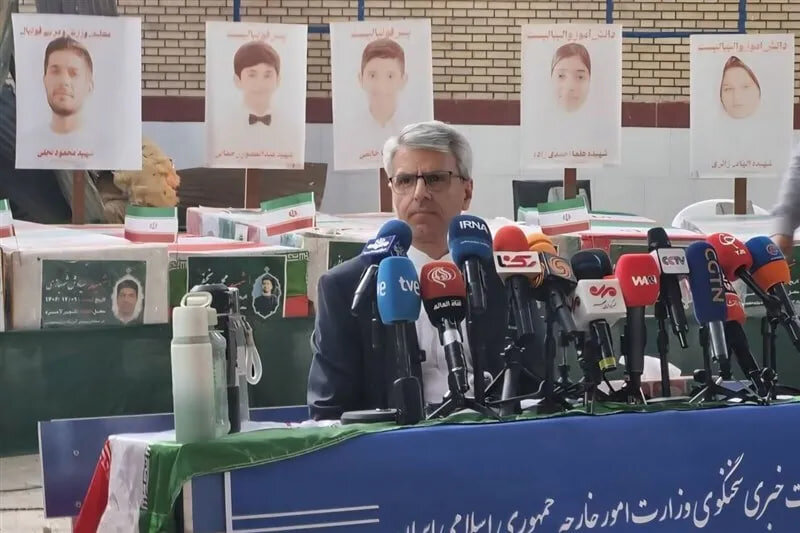
TEHRAN- Iranian Foreign Ministry spokesman Esmaeil Baqaei has accused the head of the International Atomic Energy Agency of helping create a narrative that was later used by the United States and Israel to justify military attacks against Iran.
Speaking at a news conference in Lamerd, a southern Iranian city that was targeted by the United States during the recent war, Baqaei said the IAEA director general’s reports over the past several years had contributed to the emergence of a narrative that Washington and Israel exploited to build a case for attacking Iran.
“Iran’s nuclear program was completely peaceful,” Baqaei said, arguing that “ambiguous and inaccurate” IAEA reports provided grounds for the United States and Israel to justify 'unlawful military action.'
Baqaei said the director general was undermining the credibility of the UN nuclear watchdog through such reports, adding that Iran would continue to demand accountability from both the agency and its director general.
His remarks came as Mohammad Eslami, head of the Atomic Energy Organization of Iran (AEOI), traveled to Vienna on Saturday with a delegation of senior officials to attend the 70th General Conference of the IAEA.
Lamerd strike was a war crime
Baqaei also described the US attack on Lamerd as an unequivocal war crime, saying investigations into the strike had established, according to Iranian findings, that a prohibited weapon had been used.
He identified the weapon as a cluster missile and said each munition contained about 180,000 fragments and three-gram pellets.
Standing at the site of the attack, Baqaei said the location was a civilian volleyball stadium where two teenage volleyball players, Helia and Elham, were killed.
He said several teenage football players were also killed at a football field opposite the stadium. A school behind the stadium was heavily damaged, while the Lamerd blood transfusion center was also located in the same area.
“All these sites were civilian facilities,” Baqaei said, adding that three other missiles had struck residential areas.
According to the Iranian spokesman, a total of four missiles hit the city within 35 seconds, leaving the population of Lamerd, a city of around 30,000 people, mourning.
Tehran seeks international investigation and accountability
Baqaei called on the international community, governments and people concerned about human rights to join Iran in seeking justice for those killed in the Lamerd attack.
He also referred to the attack on Minab on the same day, saying 168 people, including students and teachers, were killed.
Baqaei highlighted the case of Avina, a two-year-old child who has become, in his words, a symbol of the civilian toll of the war.
He said Avina represented the “innocence and victimhood” of the Iranian people during 'the US and Israeli military aggression against Iran.'
US. has used prohibited weapons
In a separate part of his remarks, Baqaei said Iran had documented evidence that new and chemical warfare agents were deliberately used in the attack on Lamerd.
He said Washington’s acknowledgment that a new missile had been tested in Lamerd, together with conclusive field evidence and other documentation, contradicted US explanations and demonstrated that the attack on civilians had been deliberate.
Baqaei further added that separate investigations by Iran’s Health Ministry had found that chemical warfare agents were used in the weapons to increase their lethality.
He said all evidence related to a 'war crime' had been documented and would form part of efforts to establish accountability for the attack.
Leave a Comment