Trump seethes that no one knows her; Navi Pillay has rattled US and Israel anyway
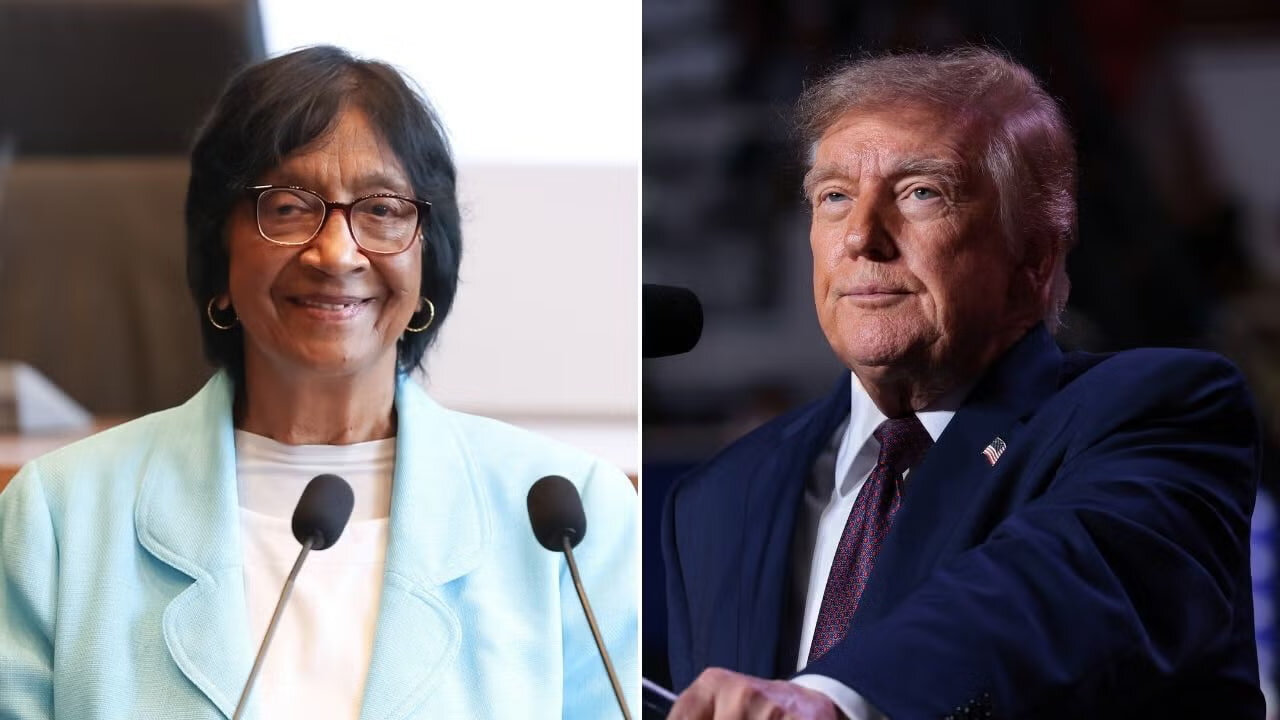
TEHRAN — Within hours of Navi Pillay being named the Nobel Peace Prize laureate, the American president had shared a post calling her a hater of America and Israel, and his secretary of state had sanctioned an entire international court. Israel summoned Joseph Goebbels.
Nobody had to explain what the 85-year-old South African jurist did to earn this. The reactions did it for her.
The Nobel deserves no reverence here. Oslo handed its peace medal to Henry Kissinger in 1973 while American bombers pounded Indochina, to Barack Obama in 2009 before drone strikes became his signature, and to Aung San Suu Kyi, who later stood before the ICJ to defend Myanmar’s generals against a genocide charge.
The prize launders power so reliably that a laureate who prosecutes it is the anomaly. Pillay needed no committee to vouch for her.
From Clairwood to Rwanda
Pillay was born in 1941 in Clairwood, a working-class Indian neighborhood of Durban, South Africa. Her father drove a bus. Neighbors raised the money for her law degree at the University of Natal. She clerked for ANC lawyer N.T. Naicker, whose house arrests pushed her into court early.
White firms refused to hire her, so in 1967 she opened her own practice, the first non-white woman in Natal to do so, in a profession that barred her from judges’ chambers and white-only law libraries.
In 1973 she won Robben Island prisoners, Nelson Mandela among them, access to lawyers and law books. When police detained her husband, she won an order forbidding his torture and sent sworn affidavits to anti-apartheid groups at the UN, which pushed the world toward a Convention Against Torture.
Then came Rwanda. She was the only woman on the tribunal’s bench for its first four years, later its president, and co-authored the 1998 Akayesu judgment, the first to hold that rape can be an act of genocide and that propaganda alone can amount to incitement.
The ICC followed, then the UN human rights office from 2008 to 2014. She now sits as an ad hoc ICJ judge in the same Myanmar genocide case.
The verdict on Gaza
In 2021 she took over the UN commission of inquiry on the occupied Palestinian territory. Its September 2025 report found Israel had committed four of the five acts listed in the Genocide Convention, with intent to destroy Palestinians in Gaza, and that President Isaac Herzog, Prime Minister Benjamin Netanyahu and former war minister Yoav Gallant had incited it.
It asked whether genocidal intent was the only reasonable inference from the pattern of conduct, the standard the ICJ applies, and found that it was.
Israel’s stated aims of “self-defense, defeating Hamas and recovering hostages” explained little of what it documented, she told Middle East Eye, because most of those acts had no military objective she could see. Gaza’s Health Ministry now counts more than 74,000 dead.
Pillay made a point Western governments dislike hearing. Nobody has to wait for The Hague. The Genocide Convention binds every state to prevent the crime, she argued, and those still shipping weapons and jet fuel to Israel risk complicity.
She also warned that Trump’s Gaza plan, which sidelines Palestinians and leaves Israel in security control, ignores the ICJ’s ruling that the occupation must end.
Trump rants, Israel smears, Washington sanctions
Trump did not congratulate her. Hours after the announcement he reposted a message saying the committee had “shamed itself beyond repair” and calling Pillay “an unabashed hater of America and Israel.”
Late Friday, after a rally in Syracuse, he posted her photograph and wrote that she got the prize “over the Great United States of America, whose Representative, ME, settled eight Wars.” No one had ever heard of her, he added, except that she “hates Israel.” It was an “indelible stain” on Norway.
In a follow-up he insisted, “I settled 8 WARS, am close to ending or settling 2 more.” His tally counts the June 2025 war on Iran, which U.S. bombers joined in illegal strikes on civilian sites. In July he told reporters 15 million people had been beheaded in the Congo war, roughly four times the usual death estimate.
He has also launched an illegal campaign of aggression against Iran, beginning on February 28. The war has killed civilians in repeated attacks, including at least 155 people, mostly children, in the Minab school massacre; at least 21 in U.S. strikes on Lamerd; and five more near a wedding in Kuhestak, where 67 were wounded.
He also invaded Venezuela earlier this year. Last year’s laureate, the Venezuelan María Corina Machado, handed Trump her medal, a gesture the Nobel Institute says does not change the official award.
Washington’s real answer to Pillay winning the prize came the same day. Secretary of State Marco Rubio announced sanctions on the International Criminal Court itself, the next step in a campaign to dismantle it “brick by brick.”
The U.S. had already sanctioned its president in August. The goal is no secret. Officials want the arrest warrants for Netanyahu and Gallant dropped. The ICC condemned the move and welcomed her prize.
Israel’s Foreign Ministry called the prize “the grotesque weaponization of an award to legitimize anti-Israel hatred and prejudice” and said Goebbels was “applauding from hell.” Netanyahu, himself wanted by the court, issued his own rebuke.
Support came quickly elsewhere. UN chief António Guterres, rights chief Volker Turk, ICC President Tomoko Akane and South African President Cyril Ramaphosa all hailed her. Hamas’s Bassem Naim called the prize a message that “humanity still resists the forces of evil targeting international justice.” Amnesty’s Agnès Callamard, beside her in Nuremberg, noted she is a former ICC judge while Washington tries to destroy the court.
Pillay learned the news at the Nuremberg Forum and told applauding supporters that if they kept clapping, she “may share this prize with Trump.” Then she turned serious, warning of a world where “power rather than law determines whose suffering matters.”
Washington and Tel Aviv have spent two years trying to bury her report. The prize has handed it a bigger stage, whatever the committee’s record.
Leave a Comment