Formation of new regional arrangements
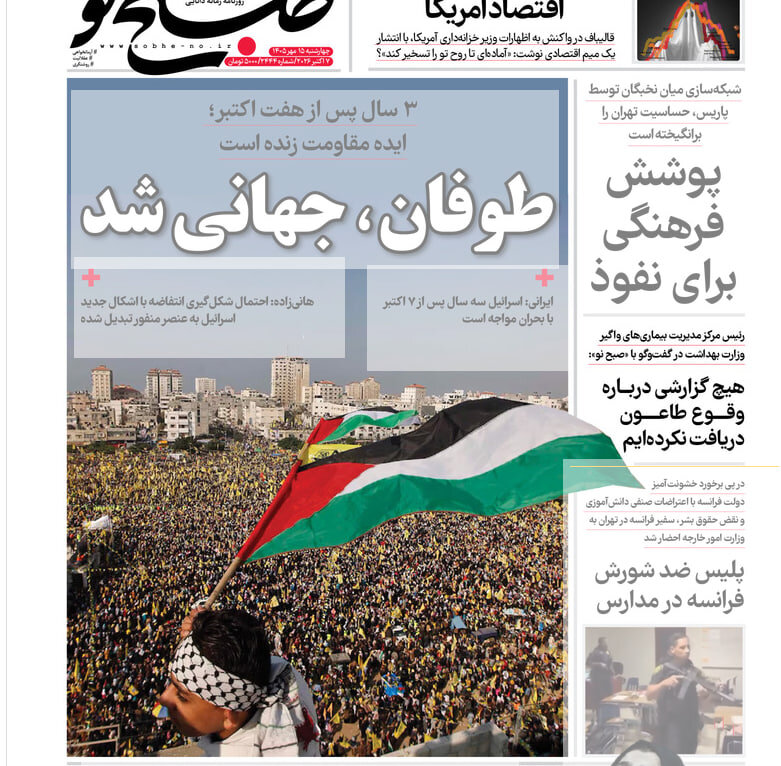
Sobh-e-No examined the withdrawal of US troops from Iraq in an interview with Hassan Kazemi Qomi, Iran’s former ambassador Iraq. He argued that the departure of American forces represents a strategic defeat for the United States on three levels: domestic Iraqi politics, the regional balance of power, and the international arena.
According to him, it is a major victory for the Iraqi people and resistance groups that opposed foreign military presence. He further suggested that this development could accelerate the broader withdrawal of US forces from the Middle East.
Kazemi Qomi linked these events to Iran’s ongoing confrontation with US and Israeli aggression. He argued that Iran’s resistance over the last 15 months has strengthened efforts to reduce American influence in the region. Combined with developments in Iraq, these trends may contribute to the emergence of new regional frameworks in the fields of security, defense, and economic development.
Etemad: Russia, China see Iran’s stability important to their strategic interests
Etemad discussed what it described as Washington’s long-term strategy in the Middle East. According to the newspaper, the plan aimed to reduce direct American involvement in the region while transferring greater responsibility for regional security to Israel. It argued that this process began during Donald Trump’s first administration through the Abraham Accords. The article argued that the broader objective was to strengthen the US position against China and Russia, but that such a strategy could not succeed without considering Iran’s role. It argued that pressure on Iran was therefore considered essential and that failure to achieve political goals could result in military confrontation. The paper further suggested that Trump’s defeat in the 2020 election delayed these plans, while his return revived them. Despite the outbreak of war (the US-Israeli war on Iran), the article maintained that Iran remains a powerful regional actor and that both Russia and China see Iran’s stability as important to their own strategic interests. Based on this assessment, the newspaper concluded that Iran should deepen cooperation with countries that view support for Tehran as consistent with protecting their own national interests.
Shargh: Are eyes turning again toward Beijing?
In an article, Shargh examined China’s growing diplomatic role regarding Iran and the United States. The newspaper argued that Beijing has reached a position where it can significantly influence Tehran-Washington relations and wider developments in the Middle East. The article pointed to China’s earlier mediation between Iran and Saudi Arabia as evidence that Beijing can help manage disputes marked by years of rivalry and mistrust. As discussions continue over reducing tensions between Iran and the United States, China’s name has once again emerged as a potential mediator. According to the paper, China’s role can be viewed on two levels: preserving channels of communication between Tehran and Washington, and preventing setbacks in the process of improving relations between Iran and Arab states. The article concluded that China is no longer merely an outside observer in Middle Eastern affairs. Instead, actors ranging from Tehran and Riyadh to Washington are paying increasing attention to Beijing’s diplomatic influence.
Hamshahri: The costs of war against Iran for Europe
Hamshahri analyzed what it described as the economic consequences of the war against Iran for Europe. The newspaper argued that the effects of the war have extended well beyond the Middle East, reaching Europe through higher energy prices, increased transportation costs, disruptions to air travel, and rising production expenses. European media have increasingly focused on the economic burden created by the conflict. It said since the outbreak of the war in early 2026, Europe’s energy markets have experienced significant volatility and price shocks. As a result, a conflict that many expected to remain geographically limited and short-lived has imposed substantial costs on European economies. The newspaper warned that these costs could continue to rise if tensions in the Middle East and the Persian Gulf persist.
Javan: Iran has consolidated control in Hormuz Strait
Javan argued that geopolitical tensions in the Persian Gulf and disruptions to shipping through the Strait of Hormuz during the past eight months have created one of the most significant oil-market shocks in recent years. The newspaper maintained that continuing disruptions and lower storage levels could drive prices even higher. The article said that efforts by the United States, Israel, European countries, and several Arab Persian Gulf states to maintain normal oil exports through alternative routes have been unsuccessful. It argued that concerns over global energy supplies are becoming increasingly serious. Pointing to a sharp decline in export volumes, the newspaper concluded that attempts to normalize traffic through the Strait of Hormuz have failed and that Iran has effectively strengthened its control over the strategic waterway. It further described the situation as a war of attrition in which the United States faces growing costs and diminishing strategic advantages.
Leave a Comment