New horizons of economic co-op being formed between Mazandaran, Uzbekistan: Uzbek envoy
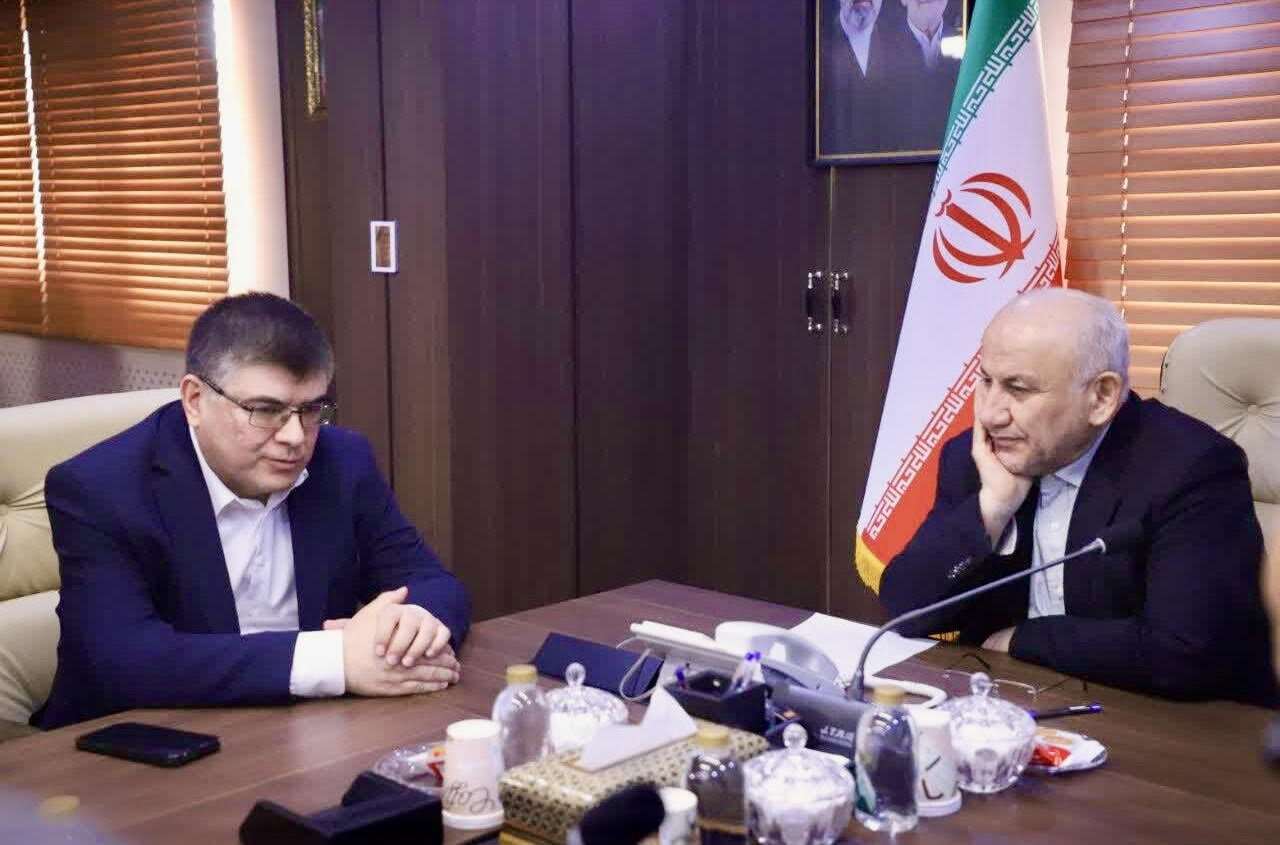
TEHRAN- According to a Khabar Online report from Mazandaran, Fariddin Nasriyev, Ambassador of the Republic of Uzbekistan to Iran, met with Mehdi Younesi Rostami, Governor of Mazandaran province, and while thanking the provincial officials for their warm hospitality, emphasized the broad capacities for economic and trade cooperation between Mazandaran and Uzbekistan.
Referring to the meeting held at the Mazandaran Chamber of Commerce, the Ambassador of the Republic of Uzbekistan to Iran stated: “A very good meeting was held with the participation of economic actors, which shows the high interest of Iranian traders in cooperating with Uzbekistan, as well as the desire of Uzbek traders to benefit from the capacities and manufactured products of Mazandaran.”
Referring to Mazandaran’s economic and production capacities, Nasriyev considered the development of interactions between the merchants of the two sides a suitable ground for increasing trade exchanges and added: “The interest of the economic actors of the two countries in joint cooperation has provided a valuable opportunity to expand trade relations and identify new areas of cooperation.”
He also expressed satisfaction over the presence of a Mazandarani in the co-presidency of the Iran-Uzbekistan Chamber of Commerce, describing this as an opportunity to strengthen economic ties and facilitate cooperation between the private sectors of the two countries.
Referring to last year’s visit of a Mazandaran delegation to Uzbekistan, the Ambassador of Uzbekistan to Iran assessed that visit as positive and constructive and said: “The trend of trade cooperation between the two sides is increasingly expanding, and there are suitable grounds for further development of these relations.”
Emphasizing the need for continued bilateral consultations, Nasriyev announced intensive planning for visits by officials in the next two to three months and stated: “In this framework, planning for a visit to Uzbekistan and inviting the Governor of Mazandaran to travel to this country is on the agenda so that the ground can be further prepared for strengthening economic and trade cooperation.”
He also referred to interactions between Mazandaran Province and Uzbekistan’s Fergana Province and considered the exchange of trade delegations between the two regions an effective step toward developing economic relations, emphasizing the importance of continuing these ties to identify investment opportunities and expand trade exchanges.
In conclusion, the Ambassador of the Republic of Uzbekistan to Iran once again expressed gratitude for the hosting and hospitality of Mazandaran officials and expressed hope that, with continued communication among officials, chambers of commerce, and private-sector actors, economic and trade cooperation between Mazandaran and Uzbekistan would enter a broader stage.
In late September, Mehr News Agency reported that Uzbekistan’s $1.4 billion food market is open to Iranian exporters as trade between the two countries reached $305 million in the first half of 2026, and three cooperation documents were recently signed.
According to this report, Uzbekistan is becoming one of Central Asia’s growing markets, as its food imports in the first quarter of 2026 jumped by nearly 46% to $1.4 billion. Yet Iran’s share of this market remains limited, and economic actors believe that expanding Iran’s food industry exports to Tashkent requires resolving financial and transportation obstacles and gaining a more accurate understanding of the market.
In recent years, Uzbekistan has pursued its foreign trade development path more rapidly, and growth in imports, increased foreign investment, and expanded ties with regional markets have made the country one of Central Asia’s notable markets.
According to the latest statistics from Uzbekistan’s National Statistics Committee, the country’s imports in the first quarter of 2026 reached $12.2 billion. Among these, food products and live animals, with a share of about $1.4 billion, were one of the main import groups. Notably, imports in this group grew by 45.9% compared with the same period last year.
These figures show that Uzbekistan’s food market is not merely a domestic consumer market; given the country’s population of more than 37 million and its position as one of Central Asia’s trade hubs, it could become more important for regional food exporters.
Meanwhile, Iran’s commercial attaché in Uzbekistan, referring to more than $280 million in trade between the two countries in the first five months of this year, cited agricultural exports, technological cooperation, and joint investment as key pillars for expanding Iran-Uzbekistan trade.
According to IRNA, citing the Iran Trade Promotion Organization, Rahmatollah Khormali said, emphasizing the growing trend of trade cooperation between the two countries: Follow-ups by the agriculture ministries of Iran and Uzbekistan paved the way for sending a 120-member delegation headed by the Minister of Agriculture and a group of activists and experts in agriculture, aquaculture, machinery, and processing industries to Uzbekistan.
He described Uzbekistan as one of the most populous countries in Central Asia and added: Uzbekistan ranks second among Iran’s export destinations among the Commonwealth of Independent States (CIS) and has considerable capacity for expanding trade relations with Iran. Meanwhile, agriculture is one of the priority areas in developing trade between the two countries.
Referring to Iran-Uzbekistan trade figures, Khormali stated: In the first five months of this year, the trade volume between the two countries reached about $280 million. During this period, despite regional conditions and their impact on Iran’s trade activities, we did not see a decline in exchanges with Uzbekistan, and we hope that with continued dispatch and hosting of trade delegations and stronger ties between the two countries’ economic actors, the trade growth trend will continue in the coming months.
Iran’s commercial attaché in Uzbekistan described food security as another important area of cooperation between the two countries and said: In the Uzbek government structure, a Food Security Agency has been established with the aim of ensuring and improving food security in areas such as livestock, poultry, quarantine, and food products, which can provide a basis for developing specialized and commercial cooperation between Iran and Uzbekistan.
Citing some of Iran’s agricultural export advantages to Uzbekistan, he noted: Currently, products such as citrus fruits, apples, kiwis, pistachios, dates, dairy products, powdered milk, and fish feed are exported from Iran to Uzbekistan, and given the capacity of this country’s market, there is also room to expand and diversify Iran’s export basket.
Khormali also addressed the potential for technological cooperation and said: About 30 projects worth $770 million in various fields, including agriculture, are being implemented in Uzbekistan by Iranian companies, which indicates the considerable capacity of Iran’s private sector to enter the Uzbek market.
In conclusion, Iran’s commercial attaché in Uzbekistan considered the holding of specialized meetings and increased interaction among officials and economic actors of the two countries in various fields, especially agriculture, as paving the way for developing mutual cooperation and increasing the volume of Iran-Uzbekistan trade.
EF/MA
Leave a Comment